
Snowplanet - Powering snow with the sun
October 2026
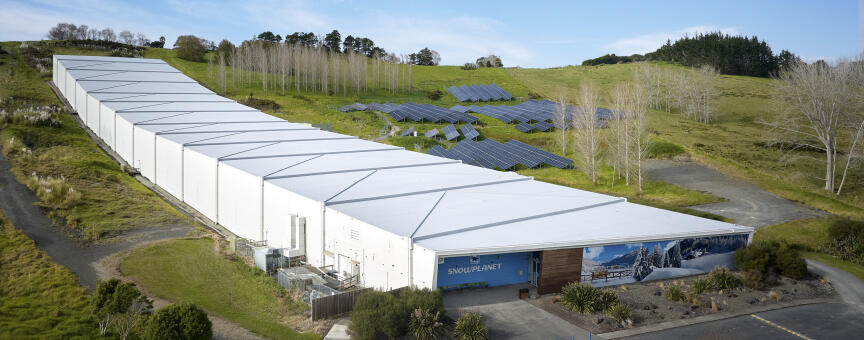
Sunshine isn't the first thing you'd associate with an indoor snow resort, but at Snowplanet, it's helping power the business. At Snowplanet in Silverdale, the Southern Hemisphere's first indoor snow resort, keeping real snow indoors year-round takes a lot of energy. Electricity is the business's second-largest operating cost, making solar a way to reduce both costs and emissions. Snowplanet's answer was an on-site solar farm, delivered through a power purchase agreement with Sunergise. It now supplies around 30% of the business's electricity and has reduced its power bill by approximately 13%.
Making solar work for the business
Snowplanet wanted to reduce its carbon footprint and operating costs without a large upfront investment. The team reviewed proposals from several solar companies, but most involved purchasing the system outright.
Instead, Snowplanet looked for a partner that could build and operate the system, then sell the electricity back to the business at a competitive rate.
Sunergise provided that model through a power purchase agreement. Sunergise funded, built and now operates the solar farm, while Snowplanet provides the site and buys the electricity generated at a lower cost than grid power. The arrangement allowed the project to go ahead without a large upfront capital outlay from Snowplanet.
Finding the right place for the panels
The roof initially seemed like the obvious place to install the solar panels. But there was a catch: installing them risked puncturing the membrane protecting the snow dome. If moisture found its way in, it could compromise the cold conditions at the heart of Snowplanet's year-round snow experience.
With the roof ruled out, Snowplanet and Sunergise brought the idea down to earth, finding a home for the panels on land beside the building. But the new location came with a hurdle of its own, resource consent. Getting approval took longer than anticipated, delaying the move from solar plans to solar power.
Giving the panels a home also meant putting some of Snowplanet's land to a different use. In return, that space would help bring down the power bill, with the savings acting much like a land-lease payment. The board remained closely involved throughout, weighing up the proposal and negotiating the agreement before giving it the green light.
Lower power bills and wider benefits
The solar farm became fully operational at the end of May 2026. Its 2,317 panels are expected to generate 1,500 MWh of clean electricity each year, offset around 101 tonnes of carbon dioxide annually and reduce the electricity Snowplanet draws from the grid by approximately 30%.
Since the system came online, solar has supplied around 30% of Snowplanet's electricity, delivering an estimated 13% saving on its power bill. With electricity being one of the business's largest expenses, those savings have helped Snowplanet limit price increases and pass some of the benefits on to customers.
At times, the solar farm generates more electricity than Snowplanet can use on site. The surplus is exported to the national grid, allowing the project to contribute renewable electricity beyond the business itself.
The solar farm has also become a talking point. Visitors noticed the panels during installation, prompting conversations about how renewable energy can help power an indoor snow dome. Some visitors have told the team they are delighted to see solar contributing to the attraction's energy needs.
What other operators can take from the experience
Snowplanet's experience shows that the way a project is funded can be as important as the technology itself. The power purchase agreement made solar possible without a large upfront investment, while lower electricity costs provide an ongoing business benefit.
It also shows why flexibility matters. The preferred rooftop installation was not practical, and the ground-mounted option brought consenting requirements and land-use trade-offs. Snowplanet's advice to other businesses is straightforward: allow plenty of time for consenting and stay open-minded about where panels can be located.
For an energy-intensive attraction, the project has created a practical way to reduce emissions, draw less electricity from the grid and lower operating costs. For Snowplanet, an unlikely partnership between snow and sunshine is now paying off.
Ready to explore an investment that could reduce costs and build resilience?
Snowplanet's experience shows how finding the right investment model can help turn a sustainability idea into a practical business improvement. Akiaki's Investment and Innovation course can help tourism businesses assess opportunities, build the business case and invest in more sustainable equipment and infrastructure. All Akiaki courses are free for TIA members and their staff. Register here.