Ōkārito Kayaks - From invasive gorse to community action
September 2026
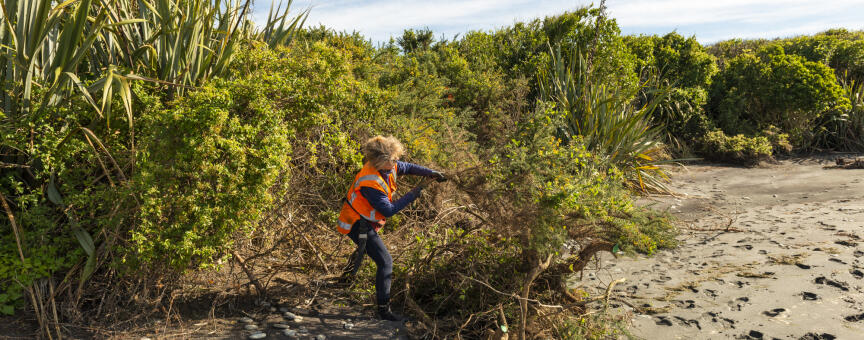
Image credit: Petr Hlavacek
Ōkārito Lagoon is New Zealand’s largest unmodified coastal wetland and an internationally significant haven for native biodiversity. Surrounded by Westland Tai Poutini National Park, it is also home to Ōkārito Kayaks, a small kayak guiding business whose team live, work and raise their families here.
For them, the lagoon is much more than a backdrop to the business; it’s their backyard. So, when invasive gorse began spreading around its edge, the threat was impossible to ignore
Turning a challenge into a community effort
Left unchecked, the gorse would crowd out low-lying native wetland vegetation, including important whitebait spawning areas and bird habitat. It would also alter the rare, pristine views stretching from the lagoon to the peaks of the Southern Alps.
But controlling gorse across water and on wet, muddy ground is difficult, labour-intensive work. With only around 40 permanent residents in the remote settlement, there were simply not enough local hands to tackle the problem at the scale required.
Rather than let the lack of local capacity stall the work, Ōkārito Kayaks found a way to bring more hands to the task: they turned controlling gorse into a holiday.
The business founded and led GorseBusters to tackle the growing problem. Launched during COVID-19, when international border closures were having a severe impact on the remote Glacier Country region, the initiative put available resources to work looking after the local environment while showcasing the region to the rest of the country.
The community working bee deliberately communicated an irreverent, No. 8 wire spirit, inviting people to give a hand, not a handout, do the hard yards and have fun along the way.
As interest grew, so did the practical challenge of accommodating, equipping and feeding volunteers. The community rallied to create the full holiday experience: locals opened their houses and baches and provided boats for transport, local farms and gardens, regional producers and national businesses contributed food, and music and entertainment brought everyone together after the work was done.
Ōkārito Kayaks funded the first event and drew on its business expertise to put the budgets, communication strategies and safety management plans in place. This careful planning, together with contributions from people and businesses, has enabled GorseBusters to remain a frugal, practical operation without relying on a major grant or continual fundraising.
A wider network of organisations also brought expertise, resources and profile to the effort. Mana whenua Kāti Māhaki ki Makaawhio supported the work to protect their wāhi taonga and contributed kai. The Department of Conservation provided initial technical expertise and tools, while Development West Coast helped attract national attention. Over time, 92 businesses and organisations have contributed goods, services or other support.
What six years of rolling up their sleeves achieved
In six years, GorseBusters has reduced gorse to near-zero visibility along approximately 50 kilometres of lagoon and wetland shoreline. More than 2,500 volunteer days have been recorded, representing an estimated $850,000 of conservation work that otherwise would not have taken place.
A total of 236 volunteers have travelled from north of Auckland to Invercargill to take part. Many have returned for subsequent events, creating a community of people personally invested in looking after Ōkārito.
“Volunteers keep coming back, year after year, to work alongside new mates and do something they know matters. Our guides feel genuine pride in being part of it. Some have chosen to work with us because of it.” — Barry Hughes, Ōkārito Kayaks
More than 70 national media features have generated an estimated $500,000 in advertising value, attracting volunteers and supplies while raising the profile of Ōkārito Kayaks and the wider region.
Beyond GorseBusters
The values behind GorseBusters run through the wider business. Across 35 years and three generations of local family ownership, each family has carried forward the same commitment to looking after Ōkārito through everyday decisions.
In 2016, after finding a discarded takeaway coffee cup beside the road, the business stopped selling single-use cups. By 2024, it had replaced its fossil-fuel vehicle fleet with electric vehicles, choosing to reduce emissions at source rather than rely on offsetting.
The business also chooses not to operate into the evening, limiting noise and vehicle movements in the small settlement. It provides its own parking and toilets rather than placing pressure on shared community facilities. These choices reflect a deliberate approach to keeping the scale of the operation right for the community and te taiao.
Together, these choices reflect a belief that the business should fit the place, rather than pursue growth at any cost. For Ōkārito Kayaks, success means protecting what makes Ōkārito special while offering a high-quality visitor experience and creating a business its people are proud to be part of.
“Growth has its place, but it needn’t be heedlessly chased everywhere. Ōkārito is one of those places that doesn’t need great change and growth. GorseBusters is just the most visible extension of the values that guide our wee business: looking after our home.” — Barry Hughes, Ōkārito Kayaks
Could a local challenge become something your community rallies around?
GorseBusters shows how a small tourism business can turn a difficult local challenge into a shared purpose, building pride among its people and creating connections with supporters from across the country.
Explore Akiaki’s Employer of Choice & Community Engagement course for practical ideas on how your business can bring people together around a shared purpose and build positive relationships with your local community. All 12 Akiaki courses are free for TIA members. Register today!