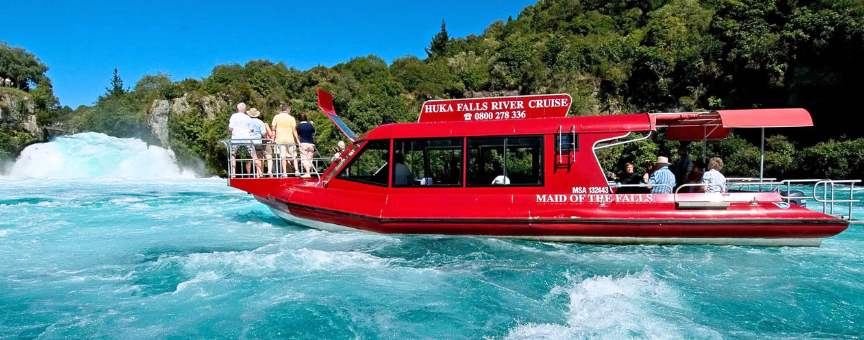
Huka Falls River Cruise - Restoring nature at Aratiatia Scenic Reserve
July 2026
Starting small on the river
When Huka Falls River Cruise began operating from Aratiatia Scenic Reserve in 2001, the area was heavily degraded. It had been used for dumping and burning rubbish, and native birdlife was largely absent.
Dave and Angela Kilmister have worked on the river for over 25 years and have taken a leadership role in improving the reserve for visitors, the local community, and the wider tourism industry. As part of that wider commitment, they introduced predator trapping in 2010, well before Predator Free NZ and other local initiatives had gained momentum in the region.
Birdlife returning to the river
The trapping programme started with just three traps. Today, it has grown to 14, all managed alongside daily business operations.
The goal remained simple and consistent: reduce predator pressure and give native birdlife the chance to return.
Over time, the results have become increasingly visible. In 2015, Kererū reappeared in the area for the first time in years, nesting where trapping was underway. Their numbers are now slowly increasing, with sightings extending further up the river.
Other species have followed. A local photographer recently identified around 10 nesting Pōpokotea (Whiteheads) near the river. There has also been a noticeable increase in Tūī and Korimako (Bellbirds), along with occasional daytime sightings of Ruru (Morepork).
Persevering through setbacks
Like many practical conservation projects, the challenges have been hands-on rather than technical.
Early on, traps were stolen, and several have since been lost or damaged due to flooding and falling trees. As trapping has become more established across the area, theft has reduced, but weather-related losses are still part of the reality.
The biggest lesson has been that nature restoration take time. Consistency over years, rather than quick wins, is what drives change.
Leading by example for the business and community
For Huka Falls River Cruise, predator trapping is part of a much broader, long-term effort to improve the Aratiatia Scenic Reserve and show what practical sustainability leadership can look like in tourism. Since 2001, their work has included rubbish removal, planting, ongoing maintenance, and collaboration with DOC, Mercury, and local volunteers.
Together, these efforts have helped transform the reserve into a thriving destination. More domestic and international visitors now come to experience the Aratiatia Rapids, while the surrounding landscape has also attracted film productions.
The site itself has changed significantly too. What was once as small gravel car park has been replaced with a large, sealed car park, improving access to nearby tracks that are now used for walking, recreation, mountain biking and competitive riding.
For Huka Falls River Cruise, the benefits are both environmental and commercial. The Increase in birdlife strengthens the visitor experience, while the improved health and popularity of the reserve create greater visibility for the business. As more people visit, the area continues to build its reputation through word-of-mouth and strong place-based promotion.
The wider reserve improvements have also created better access and a more valued, shared space for the local community.
This work shows how tourism operators can create meaningful change by caring for the places they operate in, with small, consistent actions delivering long-term benefits for nature, visitors, the business and the wider community.
Take your own next step for nature
Want to take a similar step to support biodiversity in your own operation? Akiaki’s Restoring Nature course can help you identify practical actions to protect and enhance the natural environment, while strengthening your visitor experience and connection to place.
All 12 Akiaki: Advancing Tourism courses are free for TIA members, register here.