Pōhatu Penguins - Protecting Penguins through Tourism
March 2026
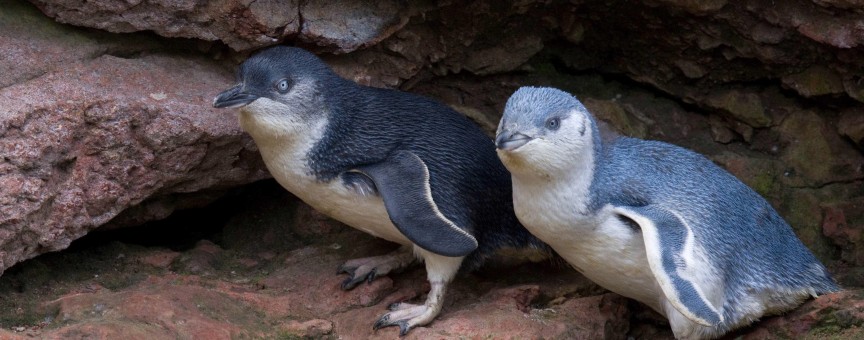
For more than a decade, the Helps family in Akaroa had been quietly self‑funding conservation work to protect Kororā (Little Penguins) on their property. Their efforts focused on predator control, monitoring, and caring for injured birds — but by the early 2000s, a new threat became impossible to ignore: Members of the public were walking through sensitive penguin habitats which stressed the birds and one night an unleashed dog killed 40 Little Penguins.
This was a turning point. The family realised that to protect the penguins, a more structured approach was needed — to create clear boundaries around how people could responsibly engage with wildlife. This led to the creation of a tourism business - Pōhatu Penguins.
Turning protection into a purpose‑led business
Pōhatu Penguins was not created to maximise visitor numbers or chase growth. It was created to control impact. By establishing a guided tourism operation, the family could:
- Limit access to sensitive areas
- Manage visitor behaviour near kororā habitat
- Generate enough income to continue and expand conservation work
Guests could still experience penguins — but only in ways that prioritised the birds’ wellbeing.
Designing experiences around wildlife needs — not visitor demand
From the outset, decisions at Pōhatu Penguins were guided by a simple question: What supports the penguins?
Evening penguin tours were designed so visitors could observe birds socialising on the water using binoculars and spotting scopes. As the business grew, sea‑kayaking was added, allowing guests to explore the marine reserve during daylight hours.
They established a self‑imposed curfew: no presence on land after dark and no activity on the water in the evening, when penguins rely on uninterrupted time to return home safely. No artificial lighting is used in the colony to retain the natural darkness. These boundaries were not imposed by regulation — they were chosen to ensure penguins could continue their natural behaviour.
The Helps family stayed closely connected with scientists and researchers, sharing knowledge and learning through conferences and collaboration to continually improve their conservation efforts.
The ongoing challenge of doing “enough”
Like many values‑led tourism businesses, there is a challenge to balance financial sustainability with the desire to always do more for the environment and community.
As the business became more financially stable, Pōhatu Penguins expanded its role beyond tours alone. School holiday programmes now welcome children to explore the area, learn about marine conservation, and connect with native wildlife. Community events create opportunities to share knowledge and inspire wider action.
Education remains an ongoing and essential part of the work. Social media has increased the interest in seeing penguins, but this can also put extra pressure on them.
Benefits for wildlife, people, and the wider community
For Pōhatu Penguins, success is not measured only in booking numbers. It is reflected in how visitors feel and act.
Visitors appreciate seeing conservation work firsthand and often take part in data collection while on tours, helping to monitor and nesting boxes and entering data into a conservation app. This deepens their connection to the experience. Tour guides are deeply committed - knowing the business prioritises wildlife encourages staff to bring passion, ideas, and care into their work.
Community involvement and genuine conservation action have strengthened trust and community support, growing their social licence to operate.
Measuring impact through trust and transparency
A dedicated trust supports much of Pōhatu Penguins’ conservation activity and produces an annual report documenting its work. This includes biological studies such as microchipping, monitoring chick survival rates, tracking penguins at sea, predator control, caring for injured birds, and regular colony surveys.
Tourism allows this important conservation work to remain viable. Consistently positive feedback from visitors reinforces that this approach resonates with travellers.
Looking ahead: regenerative tourism in action
Pōhatu Penguins’ story shows that regenerative tourism starts with care, boundaries, and a willingness to act.
Tourism, when thoughtfully designed, can educate visitors, fund protection efforts, and inspire people to take responsibility for their own backyards. Experiences that connect visitors emotionally with nature can be the catalyst for long‑lasting change.
Key learnings for tourism operators
1. Values‑led tourism builds trust with visitors and communities
Clear priorities have helped build credibility with guests, staff, and the local community. Visitors recognise when conservation is genuine rather than a marketing message, which in turn strengthens social licence and long‑term support
2. Tourism can be a tool to manage impact
The creation of Pōhatu Penguins was a response to unmanaged visitor behaviour, not an attempt to grow tourism for its own sake. Establishing a guided operation turned a problem into a protective solution.
3. Education builds care and care drives behaviour change
Pōhatu Penguins has turned observation into understanding. When guests see conservation work firsthand they leave with greater awareness and often carry that sense of responsibility home with them
4. Protecting nature sometimes means setting firm boundaries
By deliberately limiting access, setting curfews, and designing experiences around wildlife needs rather than visitor demand, Pōhatu Penguins has reduced harm while still delivering high‑quality experiences.
5. Financial sustainability enables environmental sustainability
Running a viable business model has allowed conservation work to expand. Pōhatu Penguins demonstrates that profitability and purpose are not opposing goals — when aligned, they can reinforce one another.
For more information, visit the Pōhatu Penguins website.