eRide Waiheke - Transforming Visitor Transport
April 2026
Waiheke Island is known for its vineyards, beaches, and laid-back charm—but like many destinations, it faces a challenge: how do we welcome visitors without adding to congestion and carbon emissions? For eRide Waiheke, a locally owned micro-business, the answer was to replace rental cars and tour vans with premium e-bike experiences.
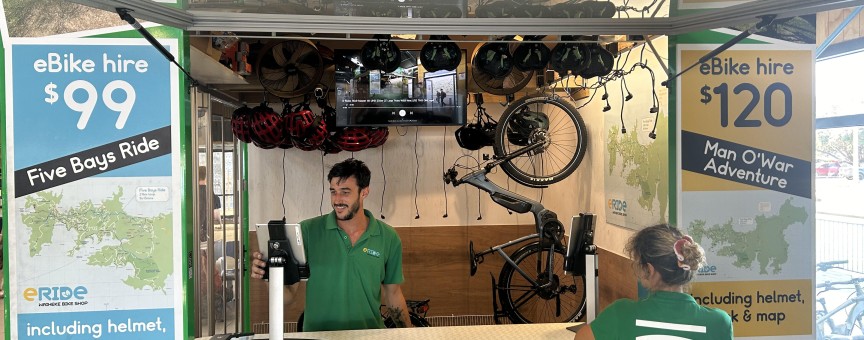
Operating from the Matiatia Ferry Terminal with a fleet of 98 bikes, eRide Waiheke serves an 85% international customer base. Their mission goes beyond offering a fun way to explore the island—they’re redefining what small businesses can do to decarbonise tourism and inspire visitors to travel responsibly.
The Challenge
Visitors to Waiheke Island typically default to using rental cars, creating traffic and increasing carbon footprints. For eRide Waiheke, the question was: How can we make low-carbon travel the easy, attractive choice?
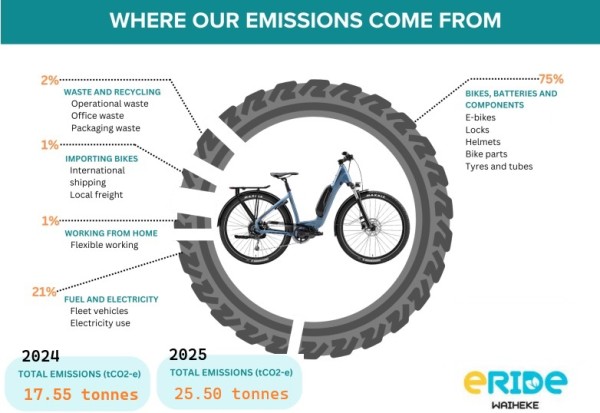
Another challenge was transparency. Cycling is naturally low carbon, but what about the embodied emissions in manufacturing and shipping those bikes? eRide Waiheke wanted to take a whole lifecycle approach—measuring, reducing, and communicating their true climate impact.
Innovations That Make a Difference
eRide Waiheke introduced three flagship initiatives:
- The eRide Climate Counter: A custom-built emissions tracking system designed to measure not only what is emitted, but also emissions avoided when visitors choose e-bikes over cars. It even calculates embodied CO₂ in the fleet and shares this data transparently with customers through future CO₂e receipts. Every ride helps displace car usage and this calculator makes that visitor to riders.
- Fleet Circularity & Visitor Mode Shift: Their operational model extends component life, reuses embodied carbon, and ensures bikes stay in service longer. These quality bikes are later on-sold to locals providing them with a low carbon commuting option.
- Launched the Waiheke Guide App: This app provides guests with information about safe routes, real time guidance and responsible tourism information in seven languages.
Changing visitor behaviour, so that guests would choose self-guided e-bikes over cars, required excellent visitor education empowering travellers to make low-carbon choices while enjoying a premium experience.
Through community collaboration they have installed 30 wayfinding signs across the key routes and worked with other operators to support safer lower-impact travel. Car-free tourism packages (ferry + e-bike+ activity) remove friction and default visitors to low-carbon travel. They also strengthened their low-emissions operations by replacing two diesel vehicles with an electric truck, further reducing their operational carbon footprint.
These innovations aren’t just technical—they’re storytelling tools. Visitors see their positive impact in real time, turning sustainability into something tangible and rewarding.
The Results
These initiatives have had far-reaching positive outcomes.
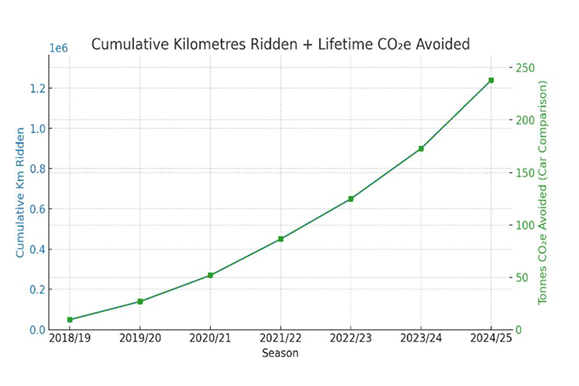
- Environmental: The numbers speak volumes. In the 2024/25 season alone, visitors rode about 340,000 km on e-bikes instead of cars. This avoided over 85 tonnes of CO₂, achieving a net climate impact of –61 tonnes CO₂. That’s not just carbon neutrality—it’s climate positivity. eRide Waiheke invested in higher quality components extending the lifespan of the bikes and reducing maintenance costs and material input.
- Visitor and Community: Clear signage on the Waiheke Guide App has increased visitor dispersal and improved visitor safety and satisfaction – giving guests the confidence to explore other businesses and activities on the island. eRide Waiheke consistently receives a net promoter score over 80 and a public review score of 4.9. Transparent information on the website and CO2e receipts for everyone ride build climate literacy and transparency.
- Economic: revenue has increased due to strong rental demand and bike resales. Operating costs have reduced due to lower component turnover and fewer vehicle recoveries. Positive reviews have led to growth in direct bookings via digital channels. Increased visitor dispersal means that a wider range of businesses on Waiheke also benefit from cycle tourism.
Lessons for Other Operators
eRide Waiheke’s journey shows that sustainability isn’t just for big businesses. Small operators can:
- Think beyond the obvious: Bikes are naturally low-emission, but consider the full lifecycle including manufacture and maintenance.
- Measure what matters: Transparent data builds trust and drives improvement.
- Engage visitors: Make sustainability part of the experience, not just a back-office metric.
- Collaborate: Connecting businesses to a shared vision amplifies the messaging and streamlines the visitor experience.
Why This Matters
These initiatives demonstrate how a small tourism business can quantify, reduce and communicate climate impact while enhancing the visitor experience and commercial resilience.
Visitors increasingly expect sustainable options, and operators who lead in this space will stand out. eRide Waiheke proves that innovation, transparency, and care for place can transform challenges into opportunities.
For further information visit their website.
Cumulative Carbon Dioxide Avoided